Across industries · A common foundation

Different industries. One secure foundation.

A factory sensor, an irrigation controller and an airport vehicle serve different purposes. They still need a secure way to communicate, receive software updates and remain manageable throughout their working lives. RIoT Secure provides that common device lifecycle foundation, across industries.

Your industry expertise. A foundation to build on.

Your application defines what a device measures, decides or controls. RIoT Secure supplies the communication, security and lifecycle layer around it. Device manufacturers, system integrators and solution providers can bring their own sensors, application logic and customer experience into that architecture.

The same platform concepts apply across sectors, while each integration is designed around its hardware, connectivity, power budget and operating conditions. You retain the industry knowledge and application behaviour that make your product valuable.

Explore your industry. Discover the possibilities.

Browse the groups below, or bring us an application from a sector of your own. The platform is vertical agnostic: these examples illustrate its reach rather than define its boundaries.

Explore possible applications and the lifecycle capabilities around them. The Comau and SAS sections later on this page show how the foundation has been used in specific customer environments.

Industry & production.

From individual instruments to production-support equipment, lifecycle capabilities can be designed around the application and the operating processes of the site.

Industrial & manufacturing

Possible applications include machine-condition monitoring, vibration analysis, production sensing and local anomaly detection. Application teams need to process signals and respond within the timing and resource requirements of their equipment.

Fusion separates application execution from communication and security processing. The lifecycle layer provides a way to connect and maintain the device while its application microcontroller concentrates on sensing, inference and local behaviour.
Food & beverage production

Connected production equipment, refrigeration, packaging lines and process monitoring can help teams understand conditions across a food-production environment.

A common device lifecycle layer can support protected telemetry and planned firmware maintenance, with application teams defining the measurements, process rules and operational records their production systems need.

Mining & quarrying

Remote equipment monitoring, environmental sensing and mobile asset telemetry are possible applications across extraction sites. Access, communications coverage and maintenance schedules can vary significantly between installations.

Integrators can design local device behaviour around those conditions while using a common approach to device communication, software delivery and lifecycle visibility.

Construction & heavy equipment

Site sensors, equipment-use monitoring, temporary installations and connected tools can operate across changing locations and project phases. Devices may need to move between jobs and customer workflows.

Managed provisioning, configuration and software maintenance can support that transition. The application and operational platform retain responsibility for equipment behaviour, site-specific permissions and deployment procedures.

Chemicals & process industries

Equipment-condition sensing, storage monitoring and auxiliary process instrumentation are possible starting points for connected embedded devices. Integrations need clear boundaries around production systems and maintenance activities.

The lifecycle layer can support device communication and controlled software changes, while process engineering, installation suitability and any required hazardous-area approvals are addressed within the complete solution.

Pharmaceuticals & life sciences

Laboratory equipment, storage-condition sensing and production-support instruments can benefit from a defined device identity and software-maintenance process. Teams may already use specialist quality and operational systems.

Lifecycle operations and available device records can be integrated into those systems. Product validation, record requirements and quality procedures remain part of the organisation’s wider implementation.

Land, water & natural resources.

Dispersed locations, changing environmental conditions and limited access make device communication and a practical maintenance path useful foundations for many land and water applications.

Agriculture & farming

Soil and weather sensing, irrigation equipment, livestock-environment monitoring and agricultural machinery are possible starting points. Devices may be dispersed across fields, buildings and remote sites, making every maintenance visit an operational consideration.

Protected communication and remote firmware maintenance can become part of the farm-management solution. Local application behaviour can be designed for periods without connectivity, with power consumption, coverage and update delivery planned for the installation.

Livestock & animal care

Connected housing sensors, feeding equipment, water monitoring and animal-environment instruments can support farm and care operations. The application determines which observations matter and how people act on them.

Protected communication and remote software maintenance can support dispersed installations, with device design accounting for power, coverage, environmental conditions and appropriate local operation.

Forestry & land management

Weather instruments, soil sensing, equipment telemetry and distributed observation points can support forestry and land-management applications. Installations may be difficult to reach and operate with limited power or connectivity.

Local processing and an efficient communication layer can be designed around those limits, alongside a practical plan for configuration, software updates and eventual device reassignment or retirement.

Aquaculture & fisheries

Water-quality sensing, feeding equipment, storage monitoring and vessel-based instruments offer different opportunities for connected devices. Data must reach the systems used by operators without making every sensor a separate management task.

A shared communication and lifecycle foundation can support those devices, with hardware, environmental protection, connectivity and maintenance procedures selected for the installation.

Environment & remote sensing

Air and water monitoring, weather stations and distributed environmental instruments are possible uses for connected embedded devices. Installations may combine limited bandwidth, constrained power and infrequent physical access.

Efficient device communication and a planned update path can help support remote operation. Where the application benefits from it, local processing or edge AI can select which observations to transmit, while the lifecycle layer handles device communication and software maintenance.

Waste management & recycling

Fill-level sensing, collection equipment, sorting machinery and site-environment monitoring are possible applications. A deployment may combine mobile assets with fixed devices spread across many locations.

The lifecycle layer can provide a common way to connect, configure and maintain the embedded devices, while routing application data into collection, maintenance or resource-management platforms.

Transport & supply chains.

Moving assets and distributed supply chains combine local application requirements with changing connectivity, customer systems and service schedules.

Transportation & logistics

Ground-support vehicles, mobile equipment, fleet telemetry and condition monitoring create opportunities to connect assets that move between operating areas. Local decisions may need to continue as network conditions change.

A separate communication and lifecycle engine lets developers keep application resources focused on vehicle or equipment functions. Device data and maintenance operations can be integrated into existing fleet and operational systems.

Aviation & airport operations

Ground-support equipment, facility sensing and airport asset monitoring can extend operational visibility around an airport. These applications involve different hardware and workflows from aircraft flight systems.

RIoT Secure’s SAS experience provides an example in ground handling. Other applications can build on the same lifecycle concepts, with the integration and assurance requirements assessed for their specific operating context.

Rail & rail-side infrastructure

Condition monitoring, environmental instruments, depot equipment and rail-side asset telemetry are possible applications. Device access and software-maintenance opportunities may be constrained by operating schedules.

A common lifecycle layer can support planned changes and protected device communication. The engineering team defines system boundaries, local behaviour and any assurance needed for the chosen rail application.

Maritime, ports & shipping

Port equipment, vessel-support systems, container monitoring and coastal infrastructure can involve devices that move between networks and operating areas. Applications need a plan for intermittent connectivity and remote maintenance.

The device lifecycle layer can sit behind port, fleet or logistics platforms, providing communication and maintenance capabilities around the customer’s own operational application.

Warehousing & cold chain

Storage-condition monitoring, warehouse equipment and temperature-sensitive shipments create opportunities for connected sensing. Teams need application data to reach inventory, quality or logistics systems already in use.

Gateway translation and API-based lifecycle operations can fit that environment. The integrator defines measurement accuracy, connectivity gaps, exception handling and the records required by the wider process.

Automotive & off-highway equipment

Equipment telemetry, diagnostics, service tools and connected subsystems can support vehicle and machinery products. Developers need to account for power states, network availability and long maintenance cycles.

Separating application execution from communication and lifecycle processing can provide a useful architecture boundary. The manufacturer validates integration, vehicle interfaces and any safety-related responsibilities for the complete product.

Energy & the built environment.

Connected infrastructure can have a long working life. Device identity, communication, software maintenance and operational integration need to be considered together from the start.

Energy & utilities

Distributed energy equipment, renewable-energy installations, power-system auxiliaries and remote asset telemetry are possible applications. Geographically dispersed devices need a maintenance approach that accounts for limited site access and long service lives.

Device identity, protected communication and managed software updates provide building blocks for that approach. Integrators define the operational boundaries, change windows and recovery procedures appropriate to the equipment and the wider utility environment.

Water & wastewater

Level and pressure sensors, pump monitoring, leak-detection instruments and remote site telemetry are possible applications. Physical access and communications coverage can be limited across a distributed network.

Protected communication, device identity and planned firmware maintenance can form part of the monitoring solution. Operational controls, environmental suitability and recovery procedures are defined around the actual equipment.

Oil, gas & distributed assets

Equipment-condition monitoring, pipeline-support sensing and remote asset telemetry can involve geographically dispersed devices with long working lives. Site access, maintenance windows and installation requirements shape the design.

A common lifecycle approach can support communication and software maintenance, while the integrator addresses hazardous-area suitability, process boundaries and any sector-specific requirements at the product and system level.

Buildings & infrastructure

Indoor-air-quality sensors, energy monitoring, building equipment and public-infrastructure sensing can bring many devices into a common operational setting. The organisation may already have a facilities platform and established maintenance workflows.

Oasis can supply lifecycle operations behind those interfaces through its REST API. The integration gateway translates compact device transmissions into JSON or another required format for the downstream service, helping the device layer fit the existing platform.

Cities & public infrastructure

Street lighting, parking sensors, public-space monitoring and distributed civic equipment can create fleets managed by different operational teams. Existing municipal systems may already own the service workflows.

API-based lifecycle operations can be integrated behind those interfaces, with the customer defining ownership, access policies, maintenance processes and data handling across the complete deployment.

Telecommunications & remote infrastructure

Site-environment sensors, cabinet monitoring, supporting power equipment and auxiliary network infrastructure are possible applications for connected embedded devices. Operators may need to maintain equipment across many locations.

The lifecycle foundation can support protected telemetry, remote configuration and software maintenance through an existing operations platform, with the device link and service interfaces designed for the chosen network environment.

Connected products & services.

A shared lifecycle layer can sit behind many kinds of connected product and service, with the application, customer experience and assurance requirements defined for each deployment.

Healthcare & connected medical equipment

Equipment-condition monitoring, storage sensing, facility instruments and connected medical products can have very different risk and assurance requirements. Each application needs its own defined scope.

A device lifecycle foundation can contribute communication and software-maintenance capabilities. Clinical functionality, patient data protection, product validation and any medical-device approvals are addressed within the complete product and organisation.

Retail & hospitality

Refrigeration monitoring, vending equipment, service appliances and connected store or venue systems can create distributed fleets across customer locations. Operators often need a familiar interface for service and maintenance.

Oasis lifecycle operations can be integrated behind that interface, allowing the solution provider to combine device data, configuration and firmware maintenance with its own customer experience.

Consumer products & smart homes

Connected appliances, garden equipment, home sensors and leisure products can need software maintenance long after the original sale. Manufacturers also need a clear approach to device onboarding and ownership changes.

The communication and lifecycle layer can become part of that product design, with the manufacturer defining the user experience, privacy controls, support policy and device-specific behaviour.

Security & access systems

Access peripherals, alarm sensors, environmental detection and equipment-status monitoring are possible applications for connected embedded hardware. Local behaviour and trust boundaries need to be defined carefully.

Protected device communication and managed software maintenance can support the wider solution. The application team designs permissions, response behaviour, availability and integration with the systems responsible for physical security.

Education & research

Laboratory instruments, campus sensing, field experiments and educational devices can involve varied hardware and evolving application software. Teams may need to update experiments without rebuilding the surrounding management infrastructure.

A shared communication and lifecycle layer can support that work, allowing researchers and developers to focus on the measurement or application while retaining a defined way to maintain deployed devices.

Sports, leisure & wearables

Training equipment, venue sensors, outdoor devices and selected wearable products can combine local processing with connected services. Battery size, form factor and the amount of data transmitted strongly influence device design.

Lifecycle capabilities can be considered alongside those constraints, with the hardware architecture, communication method and maintenance experience selected for the particular product.

A common lifecycle. Built around your application.

Dedicated application resources

With Fusion, the application microcontroller runs your workload while a separate microcontroller handles communication and security. This is useful when sensing, inference or local control needs its own CPU, memory and peripherals. Application teams retain their tools and libraries, with timing and reliability validated on the complete system.

Protected device communication

µTLS protects the device-to-backend link using RIoT Secure’s size-optimised protocol. The integration gateway adapts device data for downstream systems. The deployment defines the supported network transport, credential handling and protection of the services beyond that gateway.

Software that can evolve

Oasis brings firmware delivery and software version management into the lifecycle. Teams plan update validation and deployment around their operating conditions. Rollback and recovery depend on the target hardware, bootloader and storage configuration; approved versions and recovery behaviour are defined as part of the integration.

Operations within your platform

Every operation in the Oasis management console is available through its REST API. Integrators can build device onboarding, configuration and maintenance into their own customer interface, and connect available lifecycle records to their monitoring and support workflows. A separate management interface is optional.

Experience in different operating environments.

The Comau and SAS work brought the platform into manufacturing and airport ground operations. These examples show the same architectural approach around different applications: dedicated application processing, secure communication and a device lifecycle that can be integrated into the customer’s environment.

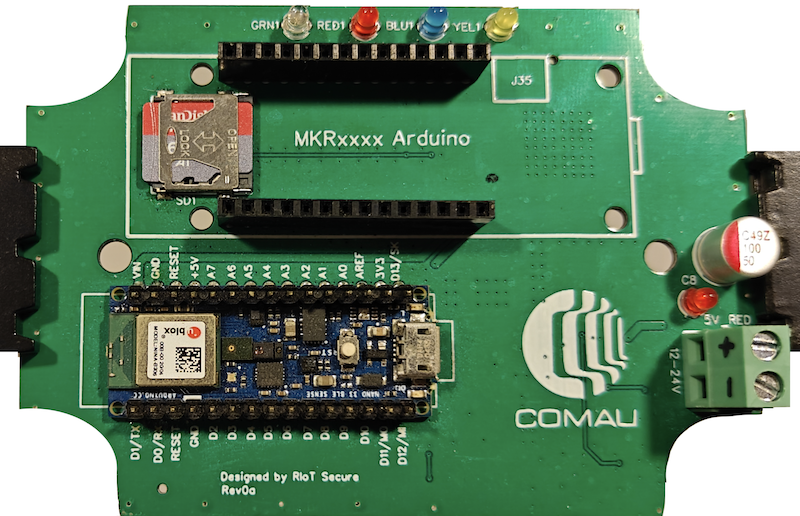
RIoT Secure interface board used to connect dedicated application hardware and a separate communication module in the Comau implementation

Robotics monitoring with Comau.

RIoT Secure supported Comau’s work on movement, vibration and anomaly detection near robotic systems. Dedicated application hardware ran sensor processing and TensorFlow Lite inference, while a separate microcontroller handled communication and lifecycle operations.

The collaboration demonstrates how an industrial application team can retain its AI development workflow and application resources while integrating the infrastructure needed to connect and maintain its devices.

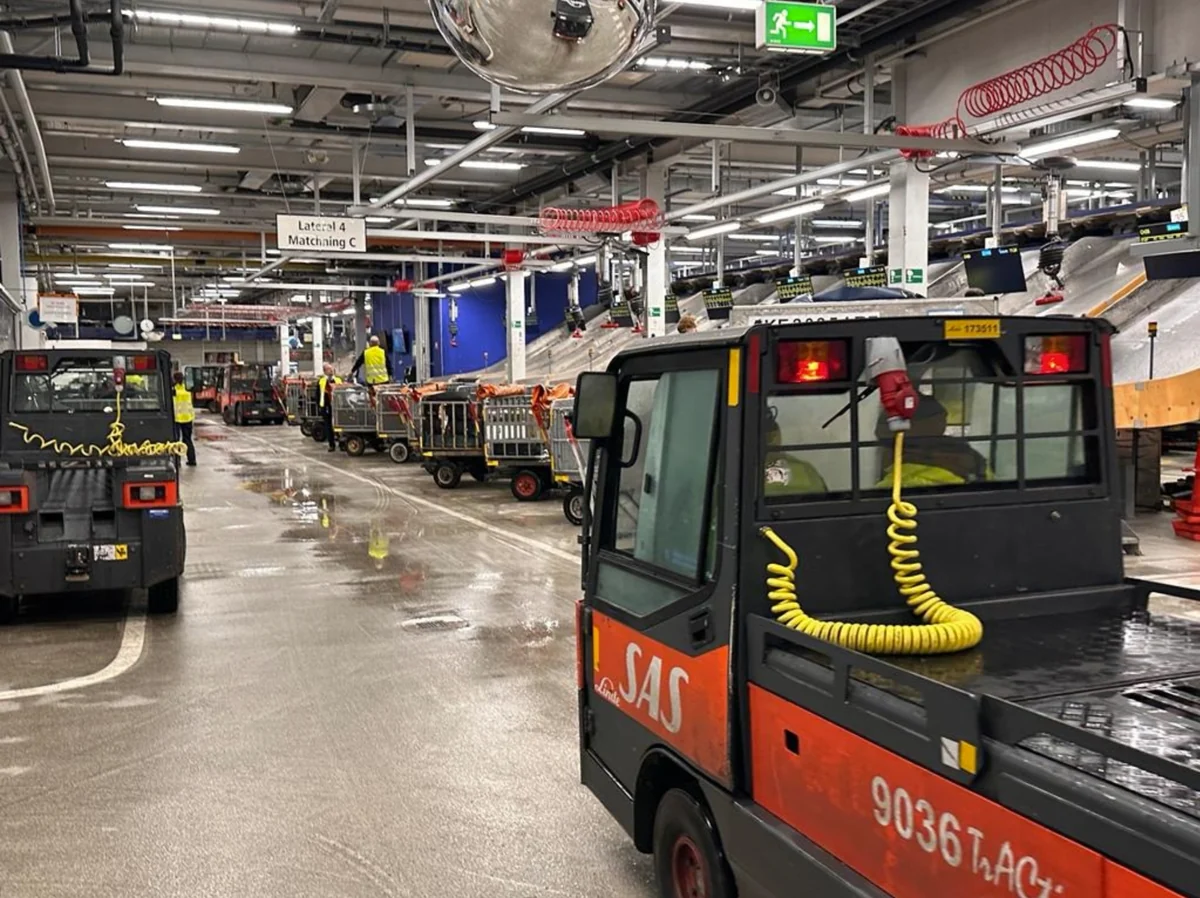
SAS ground-handling equipment at Stockholm Arlanda Airport, where the pilot progressed to commercial deployment

Airport ground operations with SAS.

The SAS pilot developed into a commercial deployment at Stockholm Arlanda Airport. The platform supported connected ground-handling equipment, operational data collection and integration with existing airport workflows.

Further work with Neuton.ai introduced local indoor/outdoor classification using GNSS signal patterns. It illustrates how an established device application can gain an edge AI capability while communication, security and software maintenance remain independently managed.

Define the operating conditions first.

Start with what the device must do locally, the resources it needs and what must happen when connectivity is unavailable. Then define the network, power budget, expected service life and the systems that will receive device data or initiate maintenance.

For equipment with timing, reliability or safety requirements, the product team validates the complete implementation and its failure and recovery behaviour. Sector-specific application logic, operational procedures and assurance remain part of the wider solution. The lifecycle foundation is designed into that environment with clear responsibilities.

Bring us your operating environment.

Tell us what your devices need to do, where they operate and how you maintain them. We can discuss how RIoT Secure’s communication, security and lifecycle capabilities fit your product and the systems around it.